See what your agents do.
Securityv0 shows which agent and automation risks matter, why they matter, and what operators should fix next.
Start 30-Day Evaluation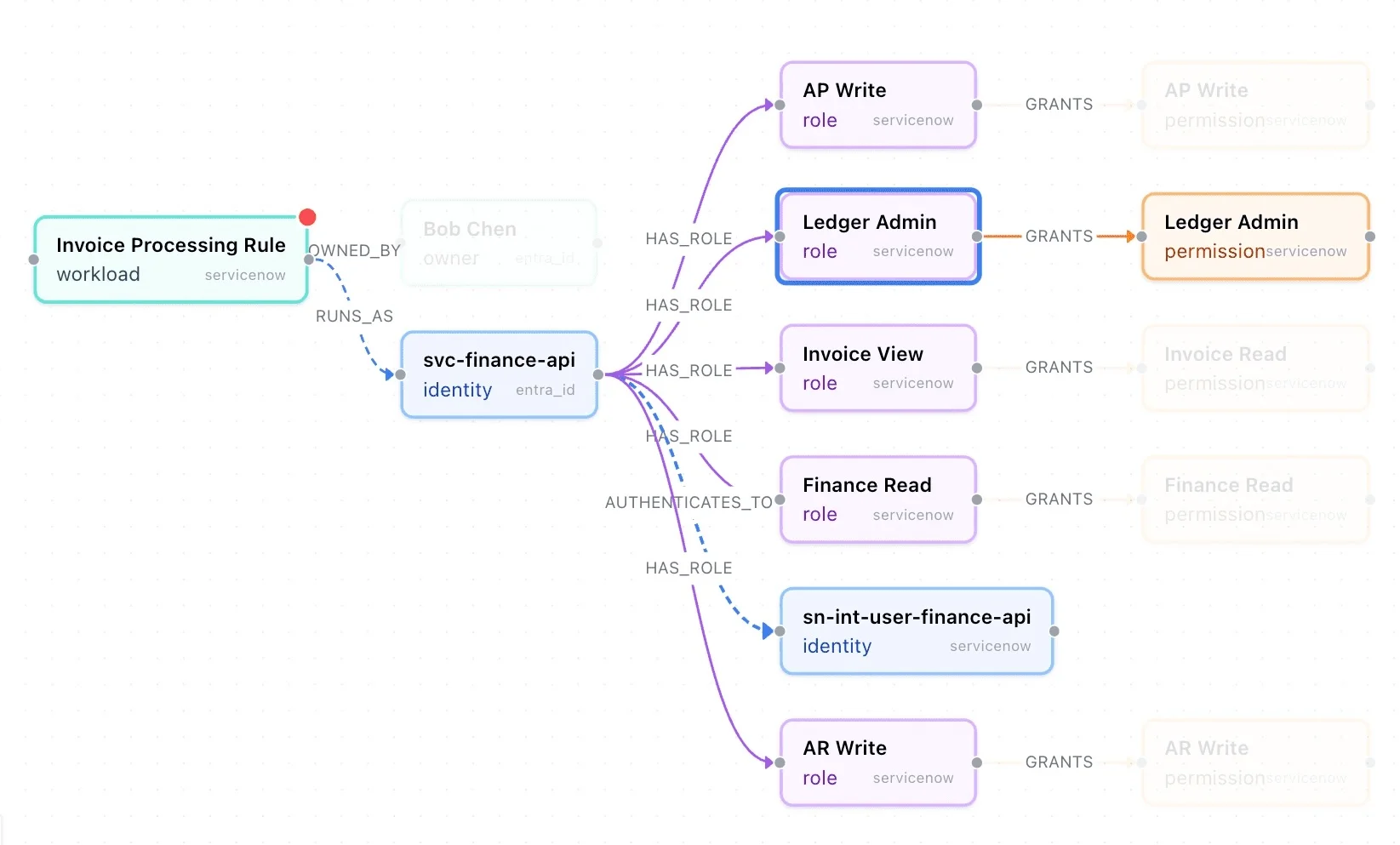
Securityv0 shows which agent and automation risks matter, why they matter, and what operators should fix next.
Start 30-Day Evaluation ServiceNow manages the workflow. Entra manages the identity. Azure manages the application. Each system appears correct on its own.
None of them show what happens when those systems interact during execution — what actually ran, what changed, what it touched, and what needs action.
The risk is not in any single system. It appears when systems interact during execution.
Structural exposure across agents, automations, and non-human identities — recurring, systemic, and invisible to existing tools.
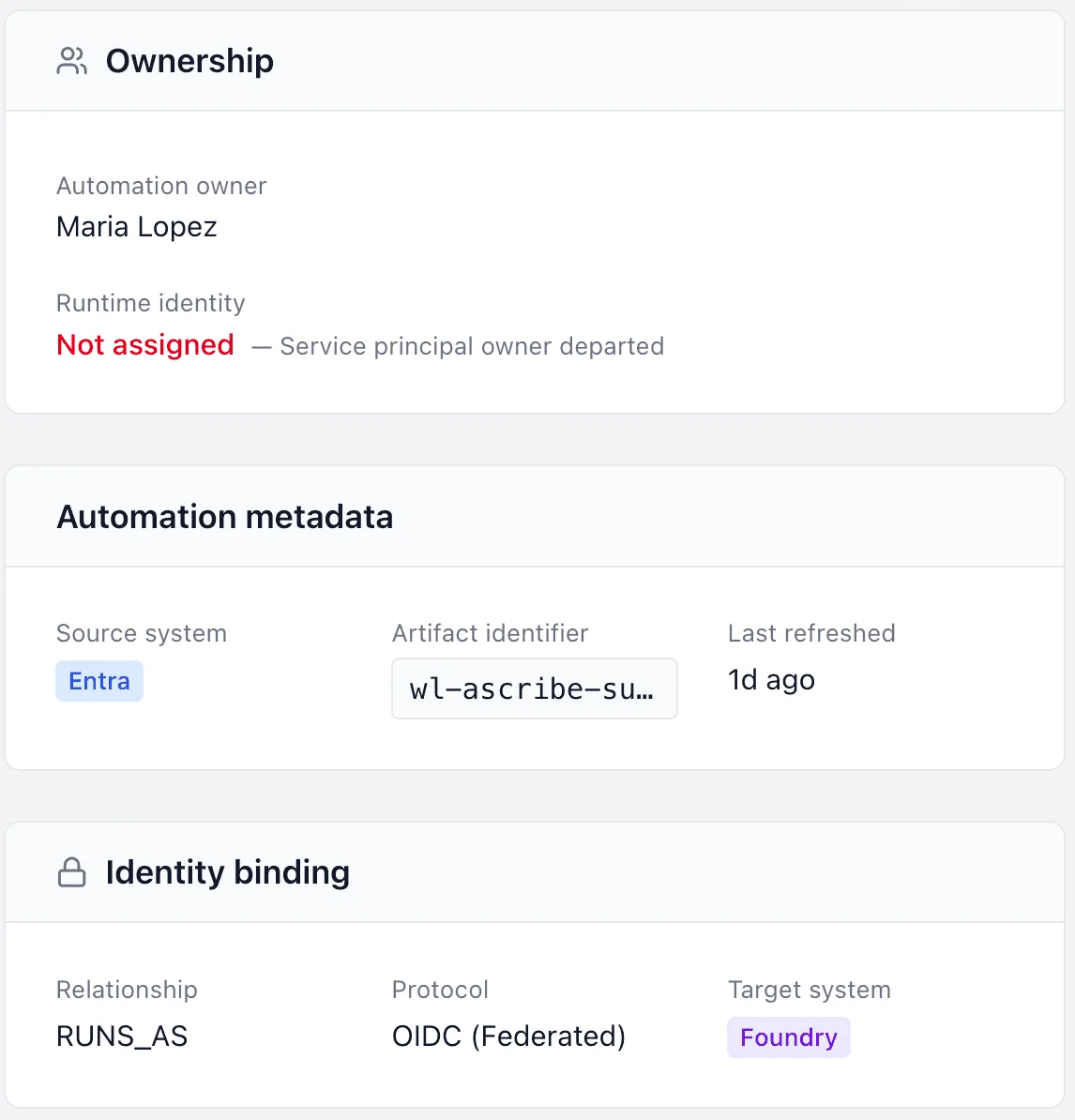
AI agents and the identities behind them remain active in production without a valid owner. No one is accountable for what they can do now.
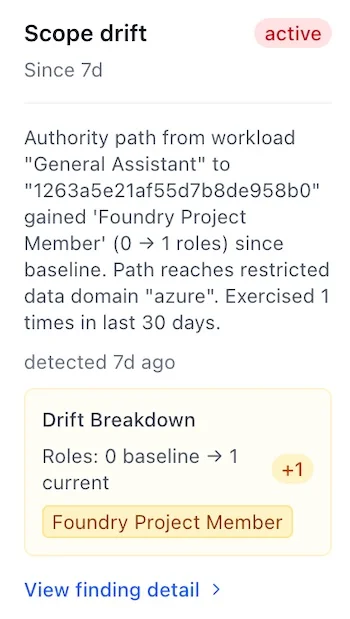
Permissions, roles, or downstream reach have expanded beyond original intent. The agent still runs with more authority than the business approved.
Agents can reach external services, AI endpoints, or sensitive internal systems without that path having been reviewed or controlled.
Every pattern is structural, evidence-based, and tied to a specific execution path — not an inferred risk score.
What AI agents actually executed
Which identities they run under
What systems and data they can reach
Where ownership is stale or permissions drifted
What to fix before approving AI in production
Not alert noise. Not a posture score. Evidence-based findings with remediation guidance your team can act on immediately.
Every finding is tied to a specific workflow and identity — with the full path, scope change, and business risk in one view.
Structural actions that reduce exposure without disrupting running processes. Not just what's wrong — what to change.
Executive-ready risk statements. Audit evidence. Prioritized by real operational impact — not alert volume.
AI rollout is moving into production and you need evidence before approval
No one can show which identities your AI agents run under today
Agent permissions have drifted beyond original scope and no one has re-scoped them
AI agents can reach external services or sensitive systems and that path has never been reviewed
An audit or executive review is coming and you need hard evidence of what agents touched
Read-only. Metadata-only. No content inspection. 100% deterministic findings. First findings in hours.
Start 30-Day Evaluation